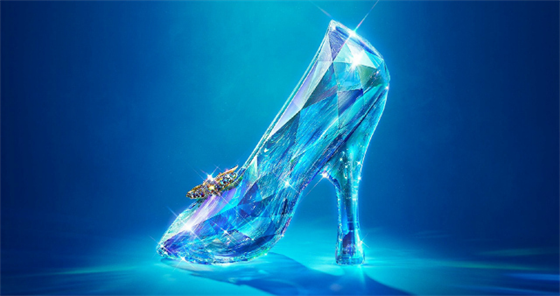

The exhibition tour dedicated to Cinderella and the filming of the famous film Three Nuts for Cinderella is located on four floors of the White Bastion, which can be accessed through a separate entrance directly from the large castle courtyard. The tour is self-contained, the guide does not give an explanation here, but is rather a companion on the journey to the secret of the shoe.
The tour is intended for lovers of fairy-tale films based on Božena Němcová. Part of the exhibition is dedicated to children, who can walk through the exhibition with Rozárka the owl while completing various tasks and riddles.
In the exhibition you will find Vinck on the Road with Magic Nuts, Cinderella by the Creek, Cinderella in her cottage with Rozárka the owl, a scene from the competition for the best shooter, a view from the kitchen with a clumsy kitchen, a view of a room with a lot of fabrics for clothes, taking peas in the ashes, a royal ball and an unforgettable final scene with a shoe, a ring… You will also see a number of interesting facts about the film, pictures from the filming in Švihov, several excerpts from the film, but also a look into the original script or the backstage and privacy of some of the actors.
Švihov Castle was built at the end of the 15th century by the royal judge Půta Švihovský, one of the most important men of the Rýzmberk family. He skilfully moved at the court of King Vladislav II. Jagiellon and gained considerable influence and property. In addition to Švihov Castle, Půta also attached the castles of Rábí, Horažďovice and Prácheň to the Rýzmberk estate. From the king, as collateral for borrowing a certain amount of money, he also received Roudnice nad Labem in Northern Bohemia or the principality of Kozelská in Silesia.
From the initial idea, Švihov Castle was composed as an artificial island. The buildings in the central layout formed the core of the castle with palaces, a chapel and a staircase tower and thus enclosed the rectangular inner courtyard. They were protected by a belt of inner walls with four corner bastions and the first moat. The second belt of walls, also with a moat, surrounded the core of the castle and thus strengthened the possibilities of defense. However, this second construction phase was completed only after Půta’s death (1504), i.e. at the beginning of the 16th century. The well-known late Gothic architect Benedikt Ried (Rejt) also played a significant role in the completion. Both moats were fed by water from the Úhlava River.
After Půta’s death, the castle was inherited by his two sons Václav and Jindřich. However, they did not manage to keep the manor and had to gradually give up their property. In 1548 , they sold Švihov Castle to Heralt Kavka of Říčany and Štěkně, whose two sons got rid of the castle again fifty years later in 1598 . This time the buyer was Humprecht Černín of Chudenice.