Nižbor Glassworks

RÜCKL CRYSTAL a.s. produces an extensive range of 24% lead crystal decorated with cuts in a wide range of decors, from simple to very complex and laborious decorated with gilding, painting and sandblasting. Due to the high quality of products and services, the company is selected for the production and supply of official state gifts!
The family glassworks offers a tour of the entire operation in Nižbor near Beroun with a demonstration of handmade production in all its stages.
 
CMQC recommends:
 
At the end of the tour, visit the product shop, which is located directly in the glassworks, where you can buy real gems at good prices.

Clementinum

Sale terminated on the spot,
Sale only in the e-shop.
 
Klementinum is setx, which is located between Karlova and Křížovnická streets. On the Old Town side of Charles Bridge, right in the center of the historical part of Prague.
Originally, a Dominican monastery was built here in 1227 at the Church of St. Clement. After the arrival of the Jesuits in Prague in 1556, at the invitation of Ferdinand I of Habsburg, they began to rebuild the Clementinum into a college. The local complex was built by the Jesuits in the years 1653-1726. This Baroque complex was modernized and expanded over the years from the High Baroque to Classicism. The complex contained classrooms, a printing house, farm buildings, accommodation premises, buildings for customs, but also the Church of St. Salvator, St. Clement, the Italian Chapel of the Assumption of the Virgin Mary, the Chapel of St. Eligius and St. John of Nepomus. In 1751, a museum of mathematics was opened in the Klementinum. After the abolition of the Jesuit order in 1773, it was used by a secularized university and the Archbishop’s Seminary. After the division of the university in 1882, only the Czech part of the Faculty of Arts and Theology remained. Since the 1930s, only the university library has been expanded. In the Klementinum, you can admire the Astronomical Tower, 68 m high. At the top of which there is a statue of Atlanta, probably by Matthias Braun.

Military Convalescent Home Měřín

Hotel Měřín is located on the right bank of the Slapy Dam about 60 km south of Prague. Ideal conditions for swimming, water sports, fishing and hiking make the hotel a popular destination for visitors to Slapy.

The hotel has a grassy beach  with gradual access to the water. Mixed forests invite you to take long walks and pick berries and mushrooms. If you want to visit some historical or cultural monuments, you will find a large number of them in the vicinity of the hotel. Hotel Měřín offers its services to the general public with year-round operation. Thanks to its equipment, it is suitable  for congress tourism, social events, family holidays, sports and wellness stays. The hotel has an aqua centre with an indoor heated pool with water attractions, a whirlpool, a water slide and a wellness centre. You can also take advantage of the multi-purpose indoor sports hall and bowling alley. In the summer, there are outdoor courts for tennis, volleyball, beach volleyball, boat rentals, pedal boats, sports equipment and bicycle rentals.

Charles Bridge – Lesser Town Bridge Tower

Charles Bridge is the oldest standing bridge over the Vltava River in Prague and the second oldest preserved bridge in the Czech Republic. The Charles Bridge replaced the previous Judith Bridge, torn down in 1342 during the spring ice melt. The construction of the new bridge began in 1357 under the auspices of King Charles IV and was completed in 1402. Until 1841, when the Emperor Franz I Bridge was completed, the Charles Bridge was the only fixed communication link across the Vltava River in Prague. Thanks to the stone bridge, Prague has become an important stop on European trade routes. The bridge is 515 meters long and its width is 9.40 to 9.50 m. The height of the road is 13 m above the normal level. It consists of sixteen arches. It is bent three times in its length and is slightly convex upstream. The bridge is complemented by three towers. In the Lesser Town, there are the larger and smaller Lesser Town Bridge Tower. On the Old Town side, the Old Town Bridge Tower. The Old Town Tower does not stand on the outer abutment of the bridge, as is customary with bridge towers, but on the first inner pillar. The Old Town abutment of the bridge is now built into the cellars of house No. 193. The bridge was gradually decorated with thirty statues and sculptures. Originally, it was only called the Stone or Prague Bridge. The name Charles Bridge was used only around 1870 on the basis of an earlier initiative by K. H. Borovský. Charles Bridge is a national cultural monument.

Tower Prague

The television transmitter Prague – City has one indisputable primacy. It is unrivalled among the Prague towers. It is almost ubiquitous in many Prague views, it can be seen even from places where no one would expect it. Its construction was decided due to the ever-growing city and the increasing disturbing effects on the reception of the television signal. The Cukrák TV transmitter and TV broadcasting from Petřín, which had been established at one time as a provisional building, were no longer sufficient.

There were several selected locations for the construction of the tower, after considering all aspects, a site in Mahlerovy sady in Žižkov was chosen. The tower project was created in 1984, the actual construction took place in 1985-1992. The tower was put into operation with the completion of its construction. Both the intention and the construction itself were accompanied by very strong protests from citizens.

Of the many designs, the architectural solution was assigned to Ing. arch. Václav Aulický, Ing. Alex Bém and Dr. Ing. Jiří Kozák, who headed the wider team of authors. A group of three tubes was chosen, connected to each other. The inner parts of the steel tubes are formed by a wall of concrete 25 cm thick. The tallest tube with a diameter of 6.4 m reached a height of 216 m, including the laminate superstructure. The other two tubes with a diameter of 4.8 m stopped their growth at a height of 134 m.

The tower also includes a restaurant at a height of 63 m and a covered observation deck 34 m higher. There are also operating rooms at a height of 105 m, two passenger elevators and a cable shaft in the main tube. In the two lower ones, there is also a freight elevator and an emergency staircase. The top of the tower is completed by a 23 m high laminate antenna extension, made of containerized rings with a diameter of 2 m. At the same time, it forms a protective cover for the system of transmitting antenna systems. Everything ends with a two-meter steel cylinder with a lid, on which lightning rods, warning lights and inside the antenna extension swing damper. At the foot of the tower is the operating building with a transmitter

Štefánik Observatory

The Štefánik Observatory is located in the Petřín Gardens near the Hunger Wall, built during the reign of Charles IV. The establishment of a people’s astronomical observatory in Prague, a library and reading room, accessible to the widest circles, and the dissemination and popularization of the results of modern astronomy, were the main goals of the Czech Astronomical Society, founded in 1917. The observatory regularly organizes lectures on certain topics, as well as programs for children and adults in the planetarium program. For example, “Earth as a Planet” and “Flights to the Stars” are programs intended for children, and “The Moon – Dream and Reality” is a program prepared for adults. The permanent exhibition is  an astronomical exhibition, which includes interactive exhibits, optical experiments and historical instruments, and especially computers with astronomical information, animations and a test. The observatory also has a library with volumes dealing with cosmonautics, astronomy and related fields for beginners and advanced people interested in these topics.

Old Town Hall

The Old Town Hall became the centre of self-government of the Old Town of Prague in 1338, when the townspeople obtained the consent of King John of Luxembourg for its establishment.

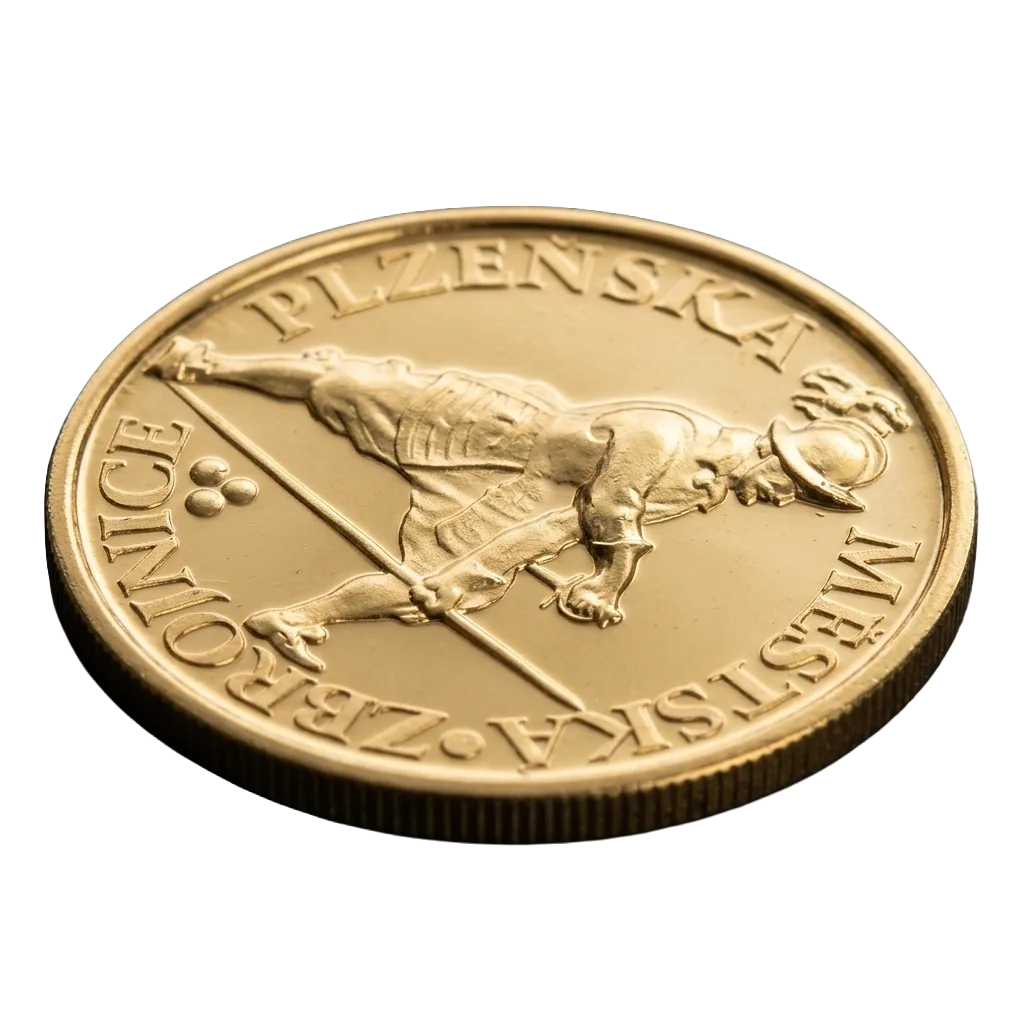
It was here that the Czech estates elected George of Poděbrady as the Czech king in 1458. After the Battle of White Mountain, the leading participants of the resistance were imprisoned here, twenty-seven of whom were executed on 21.6.1621 on the square in front of the town hall (crosses marked in the pavement). Considerable modifications were brought about in the 18th century, when after the merger of four Prague towns in 1784, the town hall became the seat of the unified official administration of the town. The following architects took part in the modifications: architect Matěj Hummel, architect Petr Nobile, architect Pavel Sprenger, architect Bernard Gueber, Jan Bělský and architect Bedřich Münzberger. In the same year, the first commemorative book was established, which has been signed by important visitors to the town hall since then. Copies of the keys to the town hall are dedicated to the most important ones as a symbolic key to the capital. Since 1871, weddings have been held at the town hall. From 1.7.1922 to the beginning of October 1941, the remains of an unknown Czechoslovak soldier from the cemetery near Zborov were laid to rest at the Old Town Hall. On the order of K. H. Frank, the grave of the unknown soldier was removed during the occupation. In the last days of the occupation, the town hall was the centre of the uprising, and the Czech National Council worked underground. The town hall was shelled and set on fire on 7 May 1945. The eastern and northern wings opposite the Týn Church were completely destroyed, the tower with the astronomical clock and the chapel were also severely damaged. On the ground floor, the archive of the capital city of Prague, the library and valuable collections were also destroyed. On the 30th anniversary of the liberation, the demolished part of the town hall was modified, conserved and the walled-up window was provided with a grille and memorial plaques. The author of the modifications was Ing. arch. J. Koreček and academic sculptor J. O. Lankáš. Competitions for the completion of the destroyed part have been announced several times, but this has never been done. Surprisingly, the fire did not destroy the elevator in the town hall tower from 1927, which was unique and served for a long time. It was taken over by the National Technical Museum and in 2000 a new elevator with barrier-free modification was finally put into operation in the main staircase and in the town hall tower. 
Astronomical Clock
The astronomical clock on the southern side of the town hall tower is especially remarkable for visitors. It was made in 1410 by Mikuláš of Kadaň and perfected at the end of the 15th century by master Hanuš of Růže. According to Jirásek’s legend, the astronomical clock was built by master Hanuš. Then the Prague councillors had him blinded so that he could not make a copy of it. Master Hanuš took revenge for this by stopping the astronomical clock. The astronomical clock actually stopped in 1865 and then there was a threat that it would be removed. Fortunately, the Prague watchmaker Ludvík Hainz was able to repair the mechanism and he and his descendants became its administrator. The astronomical clock has three parts: the highest are mechanical figures. Every hour, 12 apostles appear in two windows under the roof, each of whom has its own attribute: St. Anthony. Peter the Key, St. Matthew the Axe, St. John the Chalice, St. Andrew, the X-shaped Cross, St. Philip the Cross, St. Jacob the Roller, St. Paul’s Book, St. Thomas the Spear, St. Simon the Saw, St. Thaddeus the Tablets, St. Bartholomew the Skin, St. Barnabas the Scroll. During the fire in May 1945, all the figures of the astronomical clock created by Eduard Veselý were destroyed. The original figurines from the early Baroque period are partly preserved in the Museum of the City of Prague. They were replaced by wooden statues of the apostles, which were created in 1948 by the carver Vojtěch Sucharda. Along with the movement of the apostles, the figures of the astronomical clock on the sides are also revived. The skeleton pulls the rope and starts the march of the apostles in two windows with the ringing. He nods to the Turk, who refuses by shaking his head, the Miser nods his head with a purse in his hands and threatens with a stick, and the neighboring Marnivec looks at himself in the mirror. The rooster in the hole crows after closing the windows – it wakes up to the next hour of life and the clock on the tower begins to strike. The astronomical clock is divided into a calendar with a zodiac and a clock. The calendar plate with allegories of the months was created in 1865 by Josef Mánes. Its original is stored in the Museum of the Capital City of Prague. Prague and a copy by Bohumil Číla from 1946 is installed in the town hall. In addition to several times, the clock also shows astronomical data. The movement of the figures is similar to that of the cuckoo clock. The mechanism is located on the wall of the town hall in a stone turret, to which there are two keys: one has an astronomical clock, the other is at the city hall. A large number of functional original components have been preserved in the machine. It is a unique and unique technical monument. Until the end of the war, the astronomical clock was stretched by a crank, then it was connected to an electric motor. London’s Big Ben works on the same principle.
 

Lidice Memorial

On the morning of June 10, 1942, Lidice was surrounded and a total of 173 men over the age of 15 were gathered in the garden of the local farm. Here the men were gradually executed and buried in a mass grave. The women and their children were taken to Kladno and 3 days later the mothers and children were separated. The Germans transported a total of 203 Lidice women to the Ravensbrück concentration camp, from where 143 of them returned in 1945. Their 88 children were taken to Łódź and subsequently murdered in gas trucks in Chelmno. Of the children brought to the Reich after the war, only nine were found. A total of 17 children returned to Lidice. All the buildings of the village, including the church, were built on 10.6.1942. There was no evidence that they once existed in the territory of the former Lidice.

At the turn of the 40s and 50s of the 20th century, a new Lidice was built in the immediate vicinity of the exterminated village by the decision of the government and at the expense of the state. In the place where the old Lidice stood, a memorial with a museum was established, where the history of Lidice was mapped, especially its end in 1942, but also the fate of its abducted inhabitants.
 
Since 1995, Lidice has been a national cultural monument.

Steamboat Vyšehrad

The steamship was built as part of an extensive modernization of the fleet of the Prague Steamship Company, which took place in 1937-38. The modernization concerned all types of ships and included both repairs and improvements of existing ships, as well as the construction of new ships. Of the four steamships that were built at that time, two are active today – VLTAVA and VYŠEHRAD.
The construction of the steamship VYŠEHRAD took place in the Ústí shipyard under the leadership of the chief designer Ing. Josef Huss. Despite the new technologies already known at that time, the classic technology of steam propulsion was used to propel it, with regard to quiet operation, minimal vibrations and easy and fast manoeuvring at stations on the line. The construction of the steamboat, which cost the Prague Steamship Company 2.5 million crowns, proceeded relatively quickly and already in the spring of 1938 the steamer was ceremonially christened with its original name – ANTONÍN ŠVEHLA. Later it was renamed several times until the current name was arrived at – VYŠEHRAD.
 
Originally, this saloon steamer was used for fast transport on the route Prague – Vrana Dam. The rides were very popular and the steamer used to be well occupied. The average number of people on board used to be around 150 people. Later, it was used for passenger transport in other sections as well. After World War II, the steamer underwent several reconstructions. In the sixties, a reconstruction took place, which gave the steamer a modern face for that time thanks to the design and illumination of the on-board salons. Over time, it also switched from solid fuels to liquid fuels. Another complete renovation was carried out in the nineties and the last modifications at the turn of 2006/2007. Now the steamer is ready for luxury sightseeing cruises in Prague in renewed glory and splendor.

Open-air museum Zubrnice

In the uniquely located village in the hilly landscape of the Bohemian Central Uplands, there is a set of valuable folk architecture buildings, where timbered, half-timbered and brick buildings stand side by side. Interior and exterior exhibitions are presented in several buildings.
The village square, dominated by a Baroque well from 1695, was transported from Střížovice near Ústí nad Labem. Agricultural Homestead No. 61 – a timbered two-storey building is part of a complex of buildings reminiscent of the life and work of people on the farmstead. Village Shop – a brick two-storey house built in the middle of the 19th century with an exhibition of an old village shop with many valuable details.
Water mill – a small water mill with a top drive fed from the Luční stream. The residential house itself is a two-storey timbered building with a timbered extension – a mill.
Railway station – a technical monument built to the local railway Velké Březno – Úštěk in 1890.
In 1997, an exhibition of the old village school was opened.
In the open church of St. Mary Magdalene, there are occasional exhibitions.
The youngest open-air museum in Bohemia, its foundation is an old historic village in the wedge of the hills of the Bohemian Central Highlands. The most valuable buildings of the centre of the village and its surroundings are used for museum purposes, which are continuously supplemented with small transported objects. The public is open to the public in a complex of timbered farmsteads with interior and exterior exhibitions, including a unique hot-air fruit dryer. There is also an exhibition of the village school, an old shop and a church with regular exhibitions. In the middle of the village square there is a transferred Baroque well and not far below the village there is a small railway station with a museum exhibition of transport. On the former cancelled line, occasional museum operation is planned in the lower section of Velké Březno – Zubrnice. Nearby, upstream, there is a small timbered water mill.