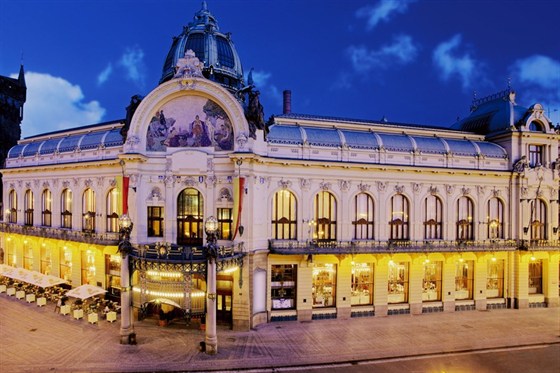


As an architectural pearl, Prague is famous in the world for a number of important and unique buildings of its time. What makes it magical for architects, however, is the unprecedented interconnection and interweaving of various building styles and artistic movements to such an extent that the eye of an expert often stands in silent amazement. One of such remarkable places is undoubtedly the space between today’s Republic Square and Na Příkopech Street. On several hundred square meters, you will find almost every style you can think of from Gothic through Art Nouveau, Neoclassicism, Functionalism to Neo-Renaissance. This stunning connection is a testimony to the intertwining of historical epochs, their imaginary interconnection, which is evidenced by the mastery of generations using the works of their ancestors to constantly enrich the magic of the golden city in the center of Europe. One such fascinating connection is offered by the Gothic Powder Tower and the Art Nouveau Municipal House. Like old friends holding each other around their shoulders in an arch that spans not only Celetná Street, but also the centuries that separate their creation. As if this magical place was destined to become a crossroads of Czech history.
King’s Court
Let’s walk through the Powder Tower back to the 14th century. The year is 1380 and the ruler Wenceslas IV, the heir to the legacy of the greatest Czech and one of the most important European rulers Charles IV, has a new residence of Czech kings built on the site of today’s Municipal House – the King’s Court. This area served as the seat of the rulers in the years 1383–1484. In addition to the palace, we can also find houses for courtiers, a spa, a lion house and a garden. After Wenceslas IV, his brother Sigismund of Luxembourg settled here. He was followed by his son-in-law Albrecht II of Habsburg, Ladislaus the Undertaker, George of Poděbrady and Vladislav Jagiellon. However, he decided to place the seat of the kings back at Prague Castle.
We are going back to our times to Na Příkopy. From the Middle Ages, we can only see a torso of the luxury of the King’s Court behind us. The majestic Powder Tower, Královodvorská and Celetná Streets remained. It was from here that the coronation processions of Czech kings started along the so-called Royal Route. The Royal Route to Prague Castle to St. Vitus Cathedral, so that the monarch could ask for the favor of heaven for himself and the Czech kingdom in prayers.
The Powder Tower, a unique remnant of the Gothic defensive system of the Old Town, still reminds us that an important trade route from Prague to the silver-rich Kutná Hora led here. King Vladislav II. Jagiellon personally laid the foundation stone of the Gothic jewel, which we can still admire today. He probably did not want to hear any more ridicule at the original, already heavily damaged gate, which was then called “Odraná”.
Retreat from glory
The king, courtiers and subjects are gone and with them the splendor and glory of this place. The Habsburgs, who sat on the Czech throne in 1526, were no longer interested in the King’s Court. The more than a hundred years abandoned and dilapidated royal residence was bought in 1631 from Polyxena of Lobkowicz by Cardinal Arnošt Harrach and he established an archbishop’s seminary here. Life returned to these places again, but even this was not to be permanent. In 1689, a huge fire engulfed the entire building. Charred ruins remained from the original seat of the rulers. However, the church did not leave the area and built a new seminary, expanded by the Church of St. Adalbert. The gate, which survived the fire without serious damage, was used at that time as a gunpowder warehouse, which later earned the attribute Prašná, which is associated with it to this day. In 1776, the archbishop’s seminary moved to new premises in the Klementinum and the former King’s Court became… a barracks. The decline of the former center of royal Bohemia was not prevented even by the establishment of a cadet school in the second half of the 19th century.
Looking for “Czech House”
The twentieth century is already in sight and Austria-Hungary is facing increasing pressure from Prague, whose political leadership is increasingly positioning itself in the role of a kind of provisional Czech government. Although the Czechs celebrate Franz Joseph with ribbons and shouts of “hello”, they will never forgive him for never allowing himself to be crowned King of Bohemia.
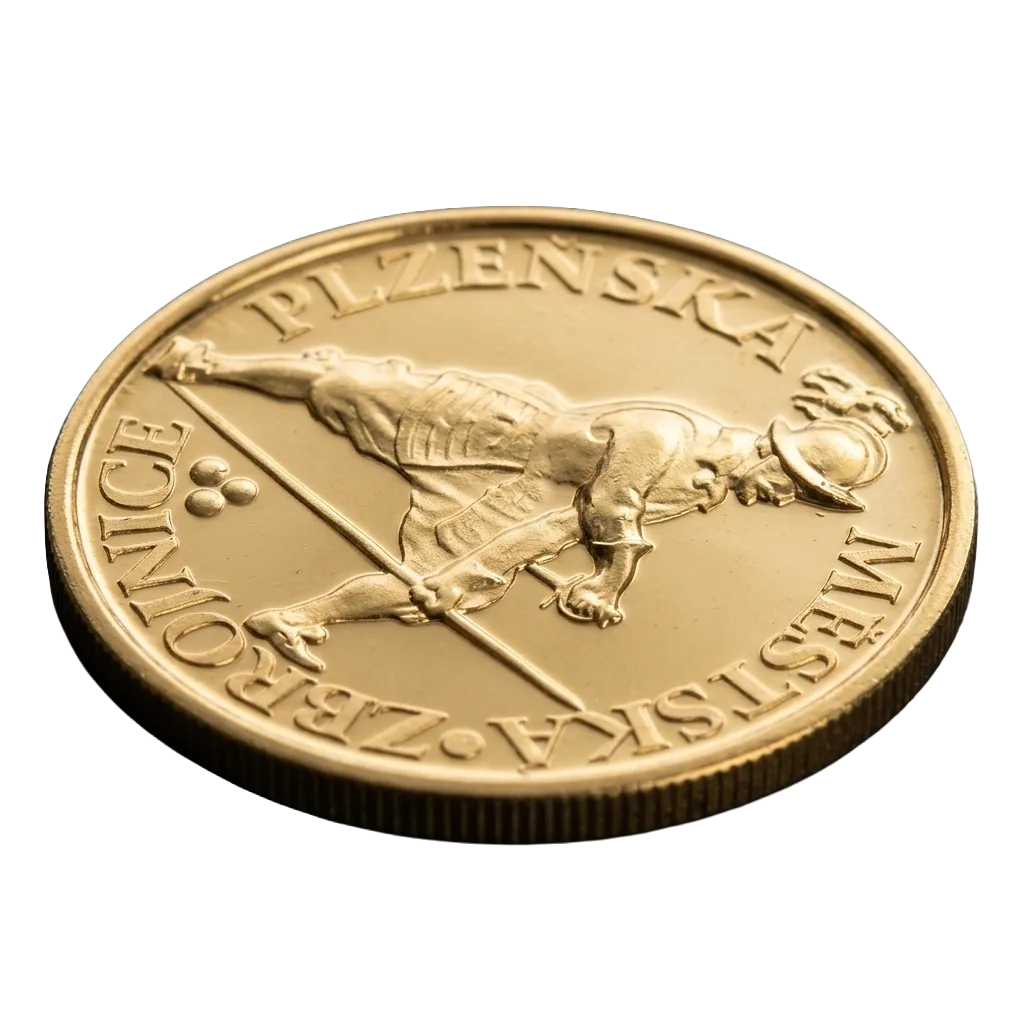
The spark ignited by the national revival is already burning to the fullest. More and more cultural and social organizations are being established, Czech art, architecture, but also industry are flourishing. The Czech element is growing and gaining self-confidence, and this understandably causes controversy, especially among the German minority. Conflicts with national or racial overtones are the order of the day. One of the places of clashes is the center of Czech and especially Prague Germans in Prague’s Příkopy. On the site of today’s Slavonic House stood the building of the Casino – the German House. While this cultural center of Prague Germanism stood in the very center of Prague on one of the main streets, the Czech equivalent represented by the Měšťanská beseda was crouched in Vladislavova Street. The representatives of this former important association decided to negotiate and on October 10, 1901, they sent a Commemorative Certificate to the Municipal Council of the capital, initiating negotiations on the construction of the Municipal House.
From the beginning, it was certain that it would not be far from the “competitive” German Casino. In the end, the choice fell on the land of the former King’s Court. Měšťanská beseda, which gave the great project an impulse with the vision of obtaining a new seat for its association activities, ironically played a completely marginal role in the project itself and subsequent use. Prague, with all due respect for the rich history and importance of Měšťanská beseda, could not afford to invest municipal money in a private project. Therefore, the capital city took over the reins of the project and began building a cultural “sanctuary” of the Czechs. It will not be long before this place will once again become an important crossroads in Czech history.
A beacon of Czech statehood
At the turn of the 19th and 20th centuries, Prague experienced an unprecedented transformation. The former provincial town with a magnificent history was now fundamentally changing. Prague is growing and gradually absorbing formerly suburban locations such as Žižkov, Břevnov, Dejvice, Bubeneč, Podolí and many others. The construction boom is driving up the prices of plots and other real estate. Beautiful buildings are being built, which we admire to this day. Among other things, the National Museum on Wenceslas Square is opening and the architect Fanta is rebuilding the Main Railway Station. Prague is literally turning into a modern European metropolis before our eyes. What is left? To give the people of Prague and all Czechs their social and cultural center. In the end, the city decided on a plot of land of the former King’s Court. It would almost seem that it provocatively chose a place almost directly opposite the German House. The existing area belonging to the army, including the Church of St. Adalbert, was razed to the ground and the construction of the “Lighthouse of Czech Statehood”, as the Municipal House was sometimes proudly called, could begin.
Priceless Municipal House
However, we would not be in Bohemia if the initial enthusiasm had not been quickly replaced by quarrels and injustices. In 1903, an architectural competition took place, in which three designs were awarded: by architects Dryák, Pospíšil and Balšánek. The biggest pitfall for the architects was the assignment. They were supposed to design a building that was magnificent and representative, but at a small cost, if possible. It is not surprising that in this situation, it was not possible to choose a winner even in the second round. On August 14, 1903, the city council finally decided that the architects Prof. Antonín Balšánek, who succeeded in the first round, and Osvald Polívka, who initially refused to participate in the competition, would be entrusted with the design of the project. The actual participation of both authors in the project is not entirely clear, but contemporaries were already amazed by the mutual cooperation of the two. Their work was supervised by a special nine-member commission, to which the government councillor Professor Josef Schulz and architects Jiří Stibral and Václav Roštlapil were also called.
The final project, including a budget of three million crowns, was approved on 10.12.1904 after various delays. This amount was not exactly small at the time, but there was still a general conviction, which time proved right, that even this would not be enough. However, the reality exceeded even the estimates of the biggest pessimists. In the end, more than twice as much, over six million crowns, was spent on the construction of the Municipal House.
A reading of contemporary sources reveals that the public contracts of that time were surrounded by the same clouds of doubt and suspicion of corruption and patronage as we know them today. The contracts – as in our times – did not receive the cheapest offers from the most experienced companies, but from the companies of friends of the city representatives. Fierce discussions and subsequent slander also accompanied the assignment of each part of the monumental decoration. The greatest clashes occurred especially between representatives of the then strongest and most influential art associations, Jednota and Mánes. From the point of view of the artistic legacy, let us take thanks for the fact that in the end excellent masters from both camps found employment. Of the painters, it is necessary to mention at least Mikoláš Aleš, Václav Jansa, Alfons Mucha, Jakub Obrovský, Jan Preisler, Josef Wenig, Karel Špillar, Max Švabinský, Josef Ullman, František Ženíšek. Sculptors include Josef Mařatka, Josef Václav Myslbek, Karel Novák, Ladislav Šaloun, František Uprka, Bohumil Kafka and Čeněk Vosmík.
Some parts of the house were put into operation as early as 1909-1911, and the whole building was ceremonially opened to the public on January 5, 1912. The cost of the building was so enormous that the city had to rent most of the building from the beginning, which again brought a number of speculations and suspicions. The press of the time approached it in a typically Czech way with a good dose of humor and ironic exaggeration. Despite certain difficulties and occasional disputes, it was possible to keep the Municipal House running and profitable operation even during the First World War.
The Municipal House — one of the best buildings of the Prague Art Nouveau — was received with great embarrassment and criticized at the time of its construction, as at the time of its creation its style was considered by some architects to be formally obsolete. The distance of almost a century allows us to put aside the emotions of the period and evaluate this building as a unique harmonious combination of architectural and artistic styles of the late 19th and early 20th centuries. Neo-Baroque, Neo-Renaissance, Western and Oriental influences are intertwined with Czech Art Nouveau. The impression of the building is enhanced by the range of decorative styles, the range of materials used and the quality of the arts and crafts.
At the time of its opening, the Municipal House also attracted attention with its unique technical facilities, which were a small sensation at the time and still arouse admiration today. Few people suspect that the building is still cooled by a unique mechanism directly with water from two deep wells. The building was equipped with central heating and ventilation, utility and drinking water distribution, dust extractor, cellar cooling, ice maker, electric and hydraulic lifts, steam laundry and drying room, bottle washroom, transformer station, battery station, pipe post and home phone network.
From the Three Kings Declaration to the Velvet Revolution
The end of the conflict devastating Europe is approaching unstoppably. The Old Continent, exhausted and decimated by the most terrible war conflict of all time, is also facing a political earthquake. It is January 1918 and the great empires are experiencing the last days of their existence. The Bolsheviks have seized power in Russia, and peace negotiations are taking place in Trieste, Lithuania. For the first time, sentences about the self-determination of nations – especially those ruled by the Austro-Hungarian Monarchy – are heard here. The reaction from Bohemia is not long in coming. Czech deputies of the Vienna Imperial Council and the provincial assemblies of the historical lands of the Kingdom of Bohemia meet on January 6 in the Gréger Hall of the Municipal House. From there, they broadcast a declaration to the world, which will go down in history as the Three Kings Declaration. For the first time, there are officially formulated unambiguously formulated demands from national political leaders for the recognition of the establishment of a sovereign, full-fledged, democratic and socially just Czechoslovak state.
Three months later, the Municipal House witnessed another important historical event. On April 13, 1918, Alois Jirásek read the Oath of Nations in the Smetana Hall. After his signing of the Declaration of Czech Writers of 1917, it is another state-building act of one of our most important personalities. Again and clearly, he formulates the demands for the independence of Czechoslovakia.
The so-called National Committee was also established in the Municipal House. The National Committee prepared all the necessary steps to establish an independent republic. In the first days after October 28, 1918, its representatives also fulfilled the function of the provisional government. In the Municipal House, the Austrian military power surrendered to the National Committee. The “Men of October” and the Municipal House merged in 1918 and thus stood at the beginning of our statehood.
It is the portraits of the so-called men of October 28, Soukup, Rašín, Švehla, Stříbrný and Šrobár, that adorn the plaque with plaques and the text in the Municipal House:
“History walked through this room, where the National Committee met, expecting the collapse of Austria and preparing the Czech liberation. Here, on the day of his triumph on October 28, 1918, he took over the government of the Czech Land, and here the words of Comenius were fulfilled: “The government of your affairs will return to you, Czech people.”
The interwar period became a golden era for the Municipal House. There was no important event that did not take place here. Every association or organization considered it an honor to have its meetings here. The ball season overshadowed the most sought-after venues in the rest of Prague until then, and concerts by leading musicians of their time sold out the halls of the Municipal House for months ahead. In a single week, there were church, tourist, artistic, political, sports, theater, music, agricultural, commercial events… and so we could go on indefinitely. The Municipal House fully fulfilled what was given to it. It became a fully multifunctional all-society cultural center of the nation.
After World War II, the importance of the Municipal House gradually declined. After February 1948, the retreat of the former pride of national consciousness is quite clear. Although various political and ideological clashes and celebrations of the regime are still taking place here, its dilapidated premises no longer seemed sufficiently representative to the comrades. The ideas of the powerful about an adequate space for megalomaniac regime events materialized many years later in the form of the Palace of Culture.
However, it is often the darkest under the candlestick. Under its veil, right in front of the eyes of the regime, on June 3, 1987, in the so-called Slovácko Lounge of the Municipal House, the art group Tvrdohlaví led by Václav Marhoul was founded.
The Municipal House returned to the centre of historical events in 1989. Between 26 November and 7 December, three of the nine key meetings between the delegations of the Civic Forum led by Václav Havel and the delegations of the last Communist government led by Prime Minister Ladislav Adamec took place in the Red and Oriental Lounges and in the Confectionery of the Municipal House. Television footage of a dissident persecuted by the regime shaking hands with the most powerful men of the Communist government flew around the world. Czechoslovakia regained its freedom and the Municipal House was once again the backdrop for a great historical turning point.