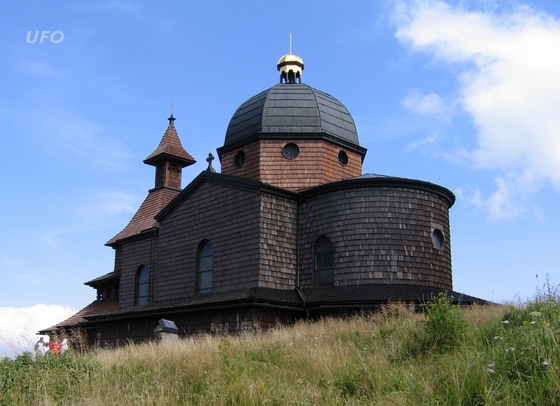


Radhošť is traditionally associated with the worship of the pagan god of hospitality, fertility and harvest Radegast. According to legend, his idol on the top of the mountain was demolished by the Thessaloniki missionaries Constantine and Methodius, who allegedly visited Radhošť after their arrival in Great Moravia in the sixties of the 9th century.
The author of this work of art, Albín Polášek, a native of Frenštát, who spent most of his life in the United States of America, completed the statue in 1930 and dedicated it to the inhabitants of the local region. However, the colossus made of concrete and granite crumbs, about three meters high, located at an altitude of about eleven hundred meters, did not resist the harsh climatic influences well. It suffered the greatest damage after being struck by lightning during a storm.
The Regional Institute for Monument Care in Ostrava therefore decided that it would be more appropriate to install a perfect copy of the statue in Radhošť instead of the rare original. For this project, which required costs of one million crowns, it was possible to get a sponsor from the Nošovice brewery, which uses the silhouette of Radegast in its logo. For the stone sculptor Jan Sobek from Leskovec near Vsetín, carving a copy of the statue became the order of a lifetime. The natural granite from which he carved the seven-tonne statue of Radegast is such a strong material that it can last for several centuries without serious damage even in extreme mountain conditions
CMQC recommends:
use the Radegast nature trail to visit and walk, which leads along the ridge between Pustevny to the top of Radhošť to the chapel of St. Cyril and Methodius. Where the last stop is. Not only nature lovers have something to look forward to.