

The Old Town Hall became the centre of self-government of the Old Town of Prague in 1338, when the townspeople obtained the consent of King John of Luxembourg for its establishment.
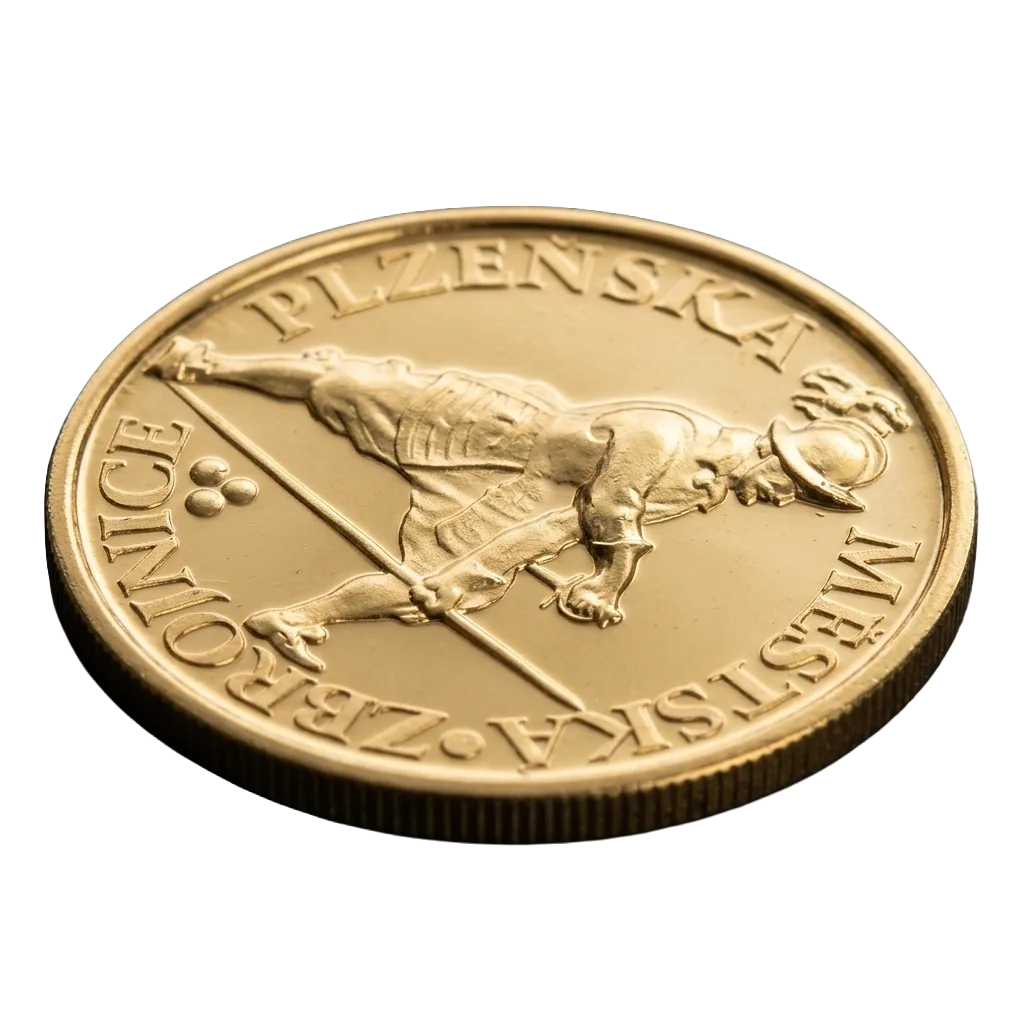
It was here that the Czech estates elected George of Poděbrady as the Czech king in 1458. After the Battle of White Mountain, the leading participants of the resistance were imprisoned here, twenty-seven of whom were executed on 21.6.1621 on the square in front of the town hall (crosses marked in the pavement). Considerable modifications were brought about in the 18th century, when after the merger of four Prague towns in 1784, the town hall became the seat of the unified official administration of the town. The following architects took part in the modifications: architect Matěj Hummel, architect Petr Nobile, architect Pavel Sprenger, architect Bernard Gueber, Jan Bělský and architect Bedřich Münzberger. In the same year, the first commemorative book was established, which has been signed by important visitors to the town hall since then. Copies of the keys to the town hall are dedicated to the most important ones as a symbolic key to the capital. Since 1871, weddings have been held at the town hall. From 1.7.1922 to the beginning of October 1941, the remains of an unknown Czechoslovak soldier from the cemetery near Zborov were laid to rest at the Old Town Hall. On the order of K. H. Frank, the grave of the unknown soldier was removed during the occupation. In the last days of the occupation, the town hall was the centre of the uprising, and the Czech National Council worked underground. The town hall was shelled and set on fire on 7 May 1945. The eastern and northern wings opposite the Týn Church were completely destroyed, the tower with the astronomical clock and the chapel were also severely damaged. On the ground floor, the archive of the capital city of Prague, the library and valuable collections were also destroyed. On the 30th anniversary of the liberation, the demolished part of the town hall was modified, conserved and the walled-up window was provided with a grille and memorial plaques. The author of the modifications was Ing. arch. J. Koreček and academic sculptor J. O. Lankáš. Competitions for the completion of the destroyed part have been announced several times, but this has never been done. Surprisingly, the fire did not destroy the elevator in the town hall tower from 1927, which was unique and served for a long time. It was taken over by the National Technical Museum and in 2000 a new elevator with barrier-free modification was finally put into operation in the main staircase and in the town hall tower.
Astronomical Clock
The astronomical clock on the southern side of the town hall tower is especially remarkable for visitors. It was made in 1410 by Mikuláš of Kadaň and perfected at the end of the 15th century by master Hanuš of Růže. According to Jirásek’s legend, the astronomical clock was built by master Hanuš. Then the Prague councillors had him blinded so that he could not make a copy of it. Master Hanuš took revenge for this by stopping the astronomical clock. The astronomical clock actually stopped in 1865 and then there was a threat that it would be removed. Fortunately, the Prague watchmaker Ludvík Hainz was able to repair the mechanism and he and his descendants became its administrator. The astronomical clock has three parts: the highest are mechanical figures. Every hour, 12 apostles appear in two windows under the roof, each of whom has its own attribute: St. Anthony. Peter the Key, St. Matthew the Axe, St. John the Chalice, St. Andrew, the X-shaped Cross, St. Philip the Cross, St. Jacob the Roller, St. Paul’s Book, St. Thomas the Spear, St. Simon the Saw, St. Thaddeus the Tablets, St. Bartholomew the Skin, St. Barnabas the Scroll. During the fire in May 1945, all the figures of the astronomical clock created by Eduard Veselý were destroyed. The original figurines from the early Baroque period are partly preserved in the Museum of the City of Prague. They were replaced by wooden statues of the apostles, which were created in 1948 by the carver Vojtěch Sucharda. Along with the movement of the apostles, the figures of the astronomical clock on the sides are also revived. The skeleton pulls the rope and starts the march of the apostles in two windows with the ringing. He nods to the Turk, who refuses by shaking his head, the Miser nods his head with a purse in his hands and threatens with a stick, and the neighboring Marnivec looks at himself in the mirror. The rooster in the hole crows after closing the windows – it wakes up to the next hour of life and the clock on the tower begins to strike. The astronomical clock is divided into a calendar with a zodiac and a clock. The calendar plate with allegories of the months was created in 1865 by Josef Mánes. Its original is stored in the Museum of the Capital City of Prague. Prague and a copy by Bohumil Číla from 1946 is installed in the town hall. In addition to several times, the clock also shows astronomical data. The movement of the figures is similar to that of the cuckoo clock. The mechanism is located on the wall of the town hall in a stone turret, to which there are two keys: one has an astronomical clock, the other is at the city hall. A large number of functional original components have been preserved in the machine. It is a unique and unique technical monument. Until the end of the war, the astronomical clock was stretched by a crank, then it was connected to an electric motor. London’s Big Ben works on the same principle.
