
Have you ever wished to discover a real treasure? You can see the Tábor treasure in the newly opened exhibition, which exhibits four thousand silver coins from the Jagiellonian period. The coins, along with other everyday objects, were discovered in one of the Tábor houses in the historic center.
A house that has hidden treasures for centuries
During the general reconstruction of house No. 308, archaeological research was carried out in Svatošova Street in Tábor in 2001. In addition to supervision and field documentation, three rescue operations were carried out, which brought new knowledge about the architectural and historical development of the house and about life in it from the end of the Middle Ages to the 17th century. The preserved finds and the acquired collections of material culture made it possible to get a more specific idea not only of the appearance of the house and the home furnishings of the Tábor burghers at the end of the Middle Ages and the beginning of the modern age, but some of them also interfere with the more general issues of period production, trade and crafts, social events, the exercise of official power, lifestyle, etc. Because all three archaeological finds represent an exceptional opportunity to look into several hundred years of distant history and thus at least partially bring closer the life, work and thinking of the townspeople of Tábor many centuries ago, we have decided to make them available to the general public in the form of a permanent exhibition called The Treasure of Tábor. It first deals with the history of house No. 308 and discoveries that belong to the time before its demise by fire in 1525. This catastrophe is also related to the discovery of a coin depot, which is one of the most important coin finds from the Jagiellonian period in our territory due to its number, quality and well-preserved hiding place. Finally, we will take a look at the house of the town scribe Václav Churáněk, who lived in No. 308 at the turn of the 16th and 17th centuries. An extensive set of house inventory has been preserved from this time, testifying not only about the supply, kitchen equipment, way of dining, but also about the owner’s profession and his social contacts.
1. The first “treasure”
Period before 1525
The period before the fire in 1525 includes the discovery of late Gothic tiles in a design that was not known from our territory until the discovery in Tábor. The products were most likely ordered by Mikuláš Vlaský of Sion, who was a mayor in Tábor in the years 1511-1525 and repeatedly a councillor and a member of the Šestipan office.
In addition to the exhibited originals of late medieval tiles, the exhibition also includes a construction reconstruction of a Gothic stove in its original size.
2. Coin Treasure
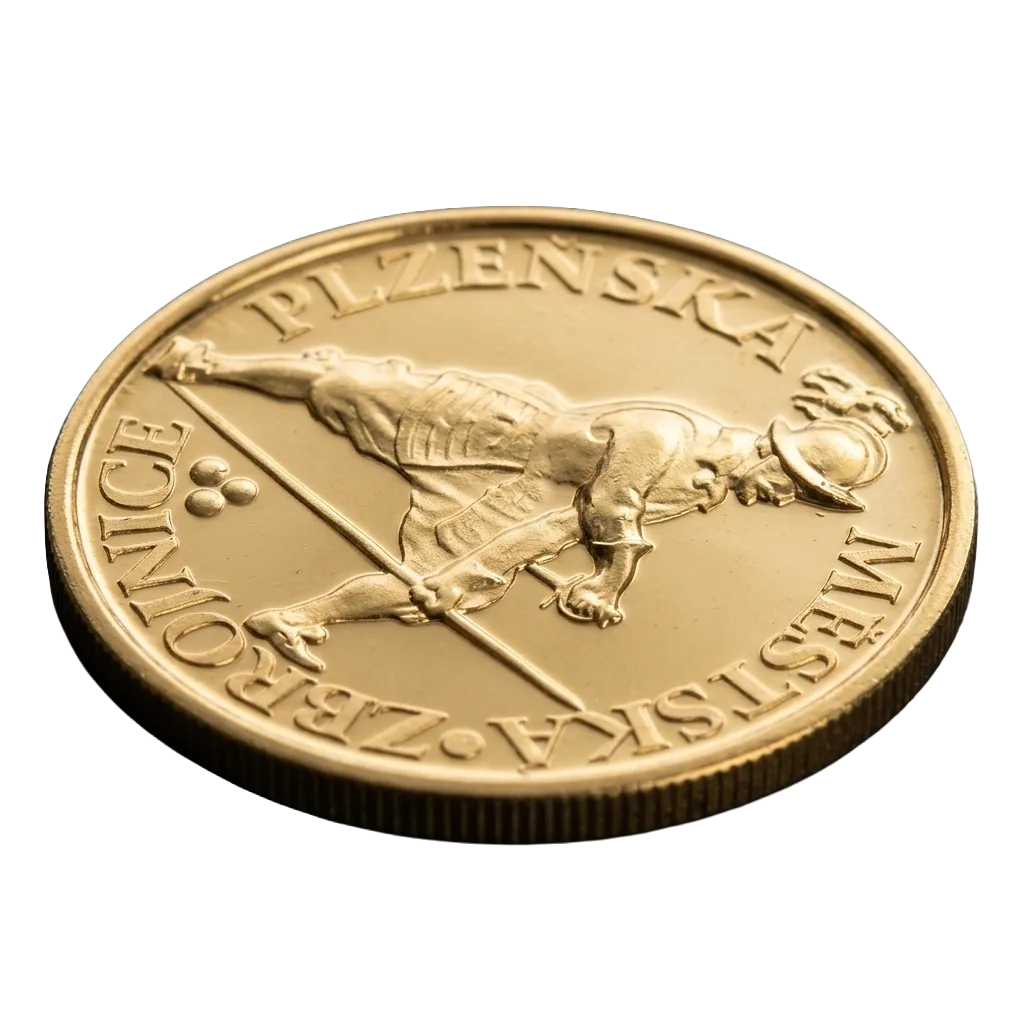
On 6-8 November 2001, two coin depots were discovered in house No. 308 . The coins were collected in two ceramic vessels under the tiled floor of one of the rooms of the rear wing of the house. The vessels contained silver coins in a total number of about 4000 pieces, weighing 7.5 kg, and represented almost 46 threescore Czech groschen in the period conversion. The youngest coins date back to 1524.
Thanks to the quantity, assortment representation and quality of the preserved findings, it is the most important coin depot from the Jagiellonian period in the Czech Republic.
3. The third “treasure” in house No. 308
At the turn of the 16th and 17th centuries, the house was owned by the Tábor town scribe Václav Churáněk. The exhibition exhibits a unique set of period material culture, found in a waste pit. In addition to objects that probably belonged to Churáněk’s personal property or were related to the performance of his profession, there is also equipment from his house, especially utility items that were used in the household for dining, supply, cooking, etc.
The exhibition is professionally, economically and technically provided and guaranteed by:
City of Tábor
Hussite Museum Tábor
South Bohemian Museum in České Budějovice
Karel Dvořák Tábor Company
Exhibition author: Doc. PhDr. Rudolf Krajíc, CSc.
Co-author of the numismatic part of the exhibition: PhDr. Jiří Chvojka
Architectural design: Ing. arch. Jan Hubička and Eva Hubičková
Place of exposition: the building of the Renaissance malt house in the area of the former Tábor Castle – NKP.
The exhibition was realized as part of the project of the City of Tábor “A Trip to the Middle Ages or How People Used to Live”. The project also includes a monographic publication entitled “The Treasure of Tábor (Archaeological Research in House No. 308)”, which was published in October 2006. Its authors are Rudolf Krajíc and Jiří Chvojka.
